
What is DEM AWD Tuning?
This is a performance optimization for the DEM (Differential Electronic Module) that controls the AWD of the vehicle.
What model/years is it for?
2004 to 2006 S60R/V70R Models. Some 2007s as well, please contact for more info.
What does it do?
Our optimization offers increased rear wheel torque distribution and increased AWD engagement time.
It doesn't snow where I live, will this still be a good fit for me?
Yes, this will still improve vehicle response.
Do I need to have any other tunes to add this?
No, this can be purchased standalone.
How much upkeep is required for this?
There should not be any additional upkeep needed for this beyond regular maintenance.
Do I need a DiCE unit or any other hardware to install?
Yes a DiCE unit and Windows 10 or newer laptop is required to install.
What is the difference between a wastegate and a CBV?
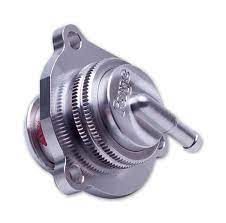
CBV stands for Compressor Bypass Valve. This device is responsible for releasing boost pressure from the system when you let off the throttle. This will prevent compressor surge and help keep your turbo running properly. Please note that this is NOT a wastegate and the wastegate upgrade add-on is not required.
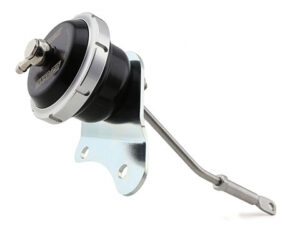
A wastegate is a device that is used to control boost pressure. This is the device responsible for regulating the actual boost output. Please note that the wastegate upgrade add-on is required in order to use this device properly.
What type of maintenance is needed?
Only normal maintenance is required for your vehicle. It is recommended that you perform maintenance at or in advance of the regular service intervals. Doing regular maintenance before a tune is sometimes referred to as "stage 0". This is recommended to help ensure that you don't have any hardware issues when tuning.
PLEASE NOTE: Any turbocharged/forced induction vehicle should be using the highest octane fuel you have available when fueling at the gas station. This applies to both tuned and stock vehicles. While Volvo sometimes says minimum 89 octane on turbo vehicles, it really really should be minimum 91 octane. The 91 octane fuel is the absolute minimum grade of fuel that you should ever use in a forced induction car. If your area has 93 octane fuel available, you should use that, as it is actually significantly better than 91 octane fuel for engine performance and longevity. We understand that the cost of gas is expensive, however, we can guarantee you that the cost of repairs is more.
Recommended Maintenance:
- Ensure spark plugs are in good condition and gapped properly. Depending on what stage tune you get, you may want to get one step colder plugs. Typically, we recommend NGK Iridium plugs for most vehicles.
- Ensure your coil packs are in good condition. This means, make sure there are no cracks or discoloration on the plastic housing, etc. If you see cracks or discoloration, it's likely time to replace the coil packs. We recommend replacing them in a complete set when needed, but it is not required.
- Check your air filter and replace, if necessary.
- Check your fuel filter and replace, if necessary.
- Change your oil and oil filter. Ensure that you use a good quality oil and an OEM filter. We recommend using a full synthetic oil such as Valvoline Full Synthetic. Please remember, not all oils and not all oil filters are created equal. We only recommend using the Genuine Volvo brand oil filter for your vehicle to ensure the longest engine life possible.
- Check to make sure your PCV (positive crankcase ventilation)/engine breather system is not clogged. Often times, a clogged breather will result in oil pooling on top of the engine and poor performance. In extreme cases, this can even cause misfires to occur.
- Make sure your vehicle does not have the check engine light on. Sometimes, you have a check engine light because you need a tune, but most of the time, tuning will be unable to resolve your check engine light. The check engine light indicates an actual problem with your vehicle that should not be ignored. This could be as minor as the rear o2 sensor heater failing or it can be as major as having the front o2 sensor not function at all, leaving the vehicle to not have any sense of fueling control (these are just some examples). In the major instance here, the vehicle should absolutely not be driven, as driving it in this broken state can damage the engine.
- Check to ensure your brakes are in good condition and have replaced, if necessary. With great power, comes great responsibility. If you're tuning your vehicle to get more power, you need to make sure that you can stop it when needed.
- We've identified some of the most important tasks here, but there are certainly more normal maintenance items that need to be performed. Refer to the manufacturer's specifications and perform all regular maintenance.
If you are unsure about any of these items, make sure to contact your mechanic so that they can advise you on what to do.
How do I choose what stage I need for my tune?
Stage 1: Perfect for stock cars! No additional hardware or mods required! You can add an intake and/or a catback exhaust if you want
Stage 2: Perfect for cars with a downpipe! Supports optional other hardware mods like an exhaust or an FMIC
Stage 2+: Meant to get the absolute most power out of the car before upgrading the turbo! Perfect for cars with an exhaust, downpipe and FMIC! Add on methanol tuning or a wastegate upgrade (P1/P3) for maximum power!
Stage 3: Made for cars with a turbo larger than what came originally on the car. Please contact us for more info. For P1 and P2 models, a stage 4 tune may be required, depending on the size of the turbo. For P3 models, stage 3 is currently the highest and will work with any size turbo. Configured to the turbo that you have installed on the car.
Examples:
- 2002 XC70 - Stock turbo is 13T. Customer installs a 16T turbo. This is going to require a stage 3 tune in addition to adding green R injectors
- 2004 S60R - Stock turbo is K24. Customer installs a K24 71mm Hybrid. This is going to require a stage 3 tune in addition to upgrading the injectors and MAF sensor and housing.
- 2000 V70 T5 - Stock turbo is 16T. Customer installs a 19T turbo. This is going to require a stage 3 tune in addition to adding green R injectors
These are just some examples of common modifications. Due to the wide range of variations available at this stage, we recommend contacting us for more information so that we can ensure you have all the hardware that you need for your setup.
Stage 4: Made for cars with a very large turbo. Some examples include K24 75mm Hybrid, K16, GT3071R, PT6266, etc. Configured to the turbo that you have installed on the car. Contact us for more information.
How do I identify what the model designator for my vehicle is?
P1 Models:
- C30 2007-2013
- C70 2006-2013
- S40 2005-2013
- V50 2005-2013
P2 Models:
- S60 2001-2010
- V70 2001-2007
- S80 2000-2007
- XC90 2003-2007 Turbo
P3 Models: All models with the 6 cylinder T6 or 5 cylinder T5 engine
- XC40 2017-2018
- S60 2011-2018
- XC60 2008-2018
- V70 2007-2018
- S80 2007-2018
- S90 2016-2018
- XC90 2011-2018
P80 Models:
- C70 1999-2005
- S70 1999-2000
- V70 1999-2000
VEA Models: All models with the 4 cylinder T6 or T5 engines
- XC40 2017-2018
- S60 2015-2018
- XC60 2015-2018
- V70 2015-2018
- S80 2015-2018
- S90 2016-2018
- XC90 2015-2018
SPA Models:
- XC40 2018-2019+
- S60 2018-2019+
- XC60 2018-2019+
- V70 2018-2019+
- S80 2018-2019+
- S90 2018-2019+
- XC90 2018-2019+